Jensen Brick McCall and Grace McCall's Adoptive Mother-and-Son Relationship
I'm Still Here- What didn't kill me made me stronger and sharperJensen Brick McCall and Grace McCall's Adoptive Mother-and-Son Relationship is founded on an act of rescue that turns an abandoned infant’s survival into a lifelong bond. Grace McCall finds Jensen Brick McCall alive after a botched abortion, when he has been left on a table with other babies who have died. She takes him home, names him, and raises him despite the hostility that their interracial family draws. For Jensen Brick McCall, Grace McCall is both the person who gives him a home and the voice that tells him his life has purpose; her influence remains central even as loss and hardship complicate his sense of belonging.
Rescue and the Making of a Family
Grace McCall’s relationship with Jensen Brick McCall begins when his biological mother is contacted and refuses to take him, telling the nurse to let the baby die. After ending the call, Grace McCall rocks him as tears fall on his face. He smiles and closes his fingers around her thumb. That small gesture accompanies a decisive change: rather than accept the order to leave him to die, she takes him home and names him Jensen Brick McCall. She understands his survival as a reason to care for him, and imagines that he may one day become a force for good in other people’s lives.
The circumstances of his rescue shape how Grace McCall explains their bond. She later recalls that he kept crying and moving, that his eyes were wide open, and that he grasped her fingertip. He was the only living baby among eleven on the table, and she could not leave him behind. She tells him that he survived an abortion that left him without the expected severe impairments, apart from a change in his eye color, and repeatedly urges him to fulfill the purpose she believes God gave him. Her conviction offers him a story of survival, but also leaves him wrestling with what purpose can mean in a life marked by abandonment and pain.
Raising Jensen and Defending His Place
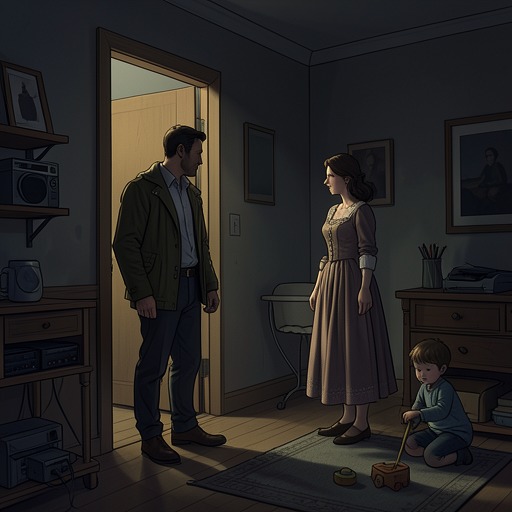
Grace McCall raises Jensen Brick McCall as her son, but she will not let him call her Mom. She regards that title as belonging to his birth mother, a distinction Jensen Brick McCall struggles to understand. He initially wonders whether the restriction reflects the difference between his Blackness and her whiteness. Grace McCall is a small woman with gray hair, a love of gardening, and a habit of baking cookies; the tenderness of that domestic life stands in contrast to the racial contempt he encounters elsewhere in the household.
Rick calls Jensen Brick McCall a racist slur, and Grace McCall insists that he use the boy’s name instead. She continues to defend him despite the abuse this brings upon her. Rick eventually leaves, saying that Grace McCall’s choice to raise a Black child over him is an embarrassment. Her defense gives Jensen Brick McCall a powerful experience of being chosen, while exposing the personal cost of that choice. He later explains that Grace McCall took him in as a Black boy who was half-dead and raised him as her own, regardless of what her husband, family, or friends thought.
Her care also takes practical, enduring forms. Grace McCall teaches Jensen Brick McCall to read, and they go to the library together every Saturday. She tells him that education can save his life. He remembers reading and spending time in the library as things that kept him alive and away from jail. The lesson is not only academic: in a childhood shaped by unstable homes, Grace McCall gives him a repeated routine, a place to go, and a skill he can carry beyond her protection.
Reversal of Care and Loss
The relationship changes as Grace McCall’s health and circumstances deteriorate. After Rick leaves, Jensen Brick McCall sees her withdraw to her room and repeatedly go to the pharmacy. Her mornings come to include ten pills and a glass of wine before work; she becomes dependent on Vicodin and Percocet and is sometimes found passed out on the couch. When she loses her hospital job, he watches her decline further. At nine years old, Jensen Brick McCall begins caring for her, bringing her tea and toast. The child she once rescued now takes on the work of tending to the person who gave him a home.
Grace McCall tells him that she smokes a cigarette dipped in embalming fluid to forget her wrongdoings. He later learns that she is haunted by babies she helped kill while working in connection with abortions: their cries persist in her dreams and, as he understands it, in her waking life. She had tried to call mothers who said to let their babies die, and he believes she saved only him. This knowledge complicates his image of his rescuer without undoing the bond. Grace McCall is the person who saved him, but she is also a person burdened by the lives she could not save and by the guilt she carries.
Before her death, Grace McCall repeats that Jensen Brick McCall has a purpose and that God chose him for something. Her words become an inheritance, but not an easy answer. He asks whether his purpose could really be to suffer through foster homes, abuse, and repeated losses. He describes himself as an orphan more than once over, and the assurance that he was meant to live collides with his experience of merely existing. The force of Grace McCall’s belief lies partly in that unresolved tension: it gives him a reason to search, even when he cannot yet accept its meaning.
Lasting Influence
Jensen Brick McCall’s memories of Grace McCall continue to shape how he understands care. Standing before the deteriorating house where she lived, he sees its fallen shingles, chipped pale-blue paint, and broken windows, while holding on to the memories that remain there. The damaged home becomes a contrast to the refuge she made for him: the building has decayed, but the acts by which she chose and raised him have not disappeared from his account of his life.
That inheritance informs his response to other people who are lost or overlooked. When he explains why he cares about Janae Morrison, he invokes Grace McCall’s decision to raise him despite the prejudice and hostility around them. He remembers that many foster families treated him as a guest, burden, or source of money, while Grace McCall made him feel worth caring for. Her example helps explain why he sees worth in someone who is hurt and difficult to reach. The relationship therefore continues beyond childhood and bereavement: the rescued child carries forward the form of attention he received, even as his own search for purpose remains unsettled.